If you love the idea of living near Portsmouth’s historic core, a townhouse or condo can offer a smart way to enjoy that setting without taking on every task that often comes with a standalone home. Still, condo living in historic Portsmouth comes with a few important tradeoffs, from exterior approval rules to parking logistics and HOA review. This guide will help you understand what to expect, what to compare, and how to make a confident decision before you buy. Let’s dive in.
Why Portsmouth condo living stands out
Portsmouth’s downtown historic neighborhoods offer more than charm. They sit within an actively regulated preservation area designed to protect the city’s architectural and historic resources. The Portsmouth Downtown National Historic District was listed on the National Register in 2017, and the Historic District Commission uses design guidelines to manage change in the area.
For you as a buyer, that matters because ownership may involve more planning than it would in a typical condo community. Within the Historic District, a Certificate of Approval is required for construction, demolition, repair, renovation, or alteration of covered buildings. If you are considering a townhouse or condo with visible exterior elements, those rules should be part of your decision from day one.
Historic character shapes daily living
Portsmouth’s historic neighborhoods have a broad architectural mix, and that variety can be a big part of the appeal. The city identifies common styles such as Georgian, Colonial, Federal, Greek Revival, Italianate, Second Empire, Vernacular Victorian, Shingle, Colonial Revival, and Tudor Revival. Many buildings also evolved over time, which means older condo conversions may include a blend of original and later features.
That often creates homes with more personality than a newer, more standardized building. Floor plans may feel less uniform, storage may vary, and finishes can reflect the building’s history. If you value character and location, that can be a major plus.
Older conversions can feel unique
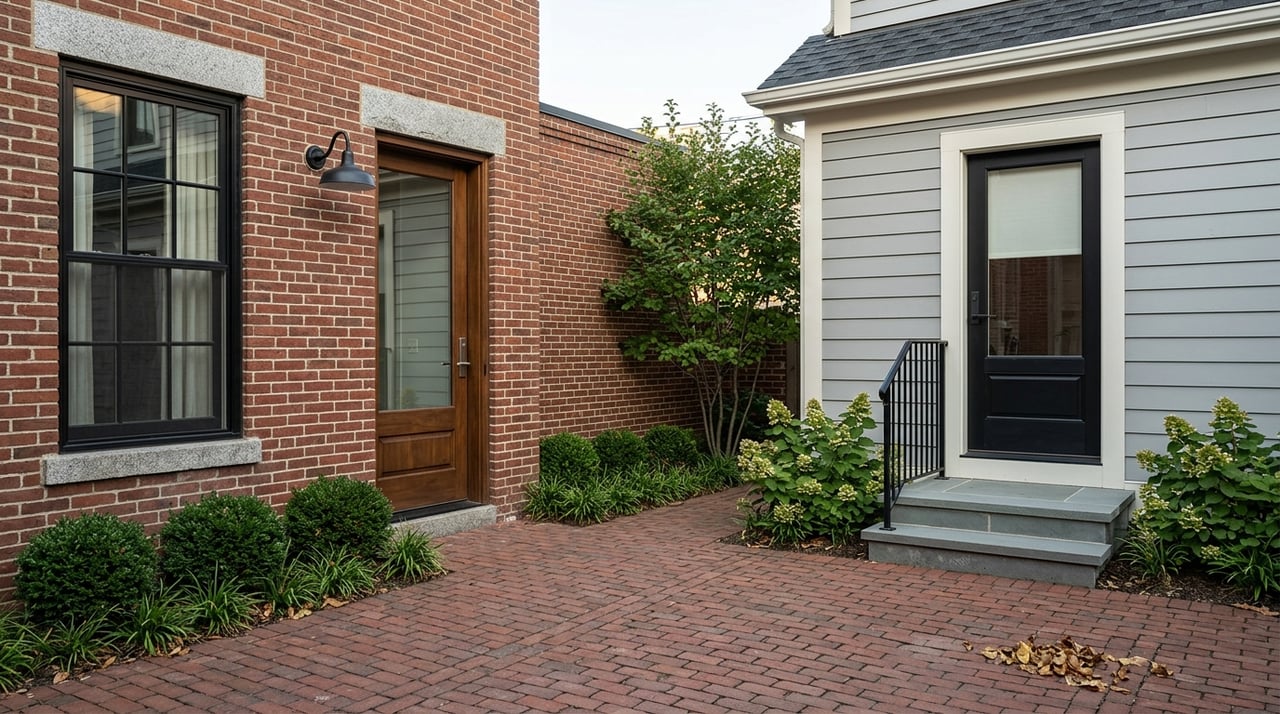
Many historic condos are the result of adaptive reuse, not new construction. In the Market Square area, the city notes that developers began rehabilitating historic commercial and industrial buildings in the 1970s and converting them into residential, office, and retail use.
That history helps explain why some units feel distinctive and a little idiosyncratic. You may find exposed details, unusual layouts, or a one-of-a-kind setting that would be hard to replicate in a newer project. At the same time, that uniqueness means each property deserves close review on its own terms.
Walkability is a real lifestyle perk
One of the biggest draws of townhouse and condo living in Portsmouth is how connected daily life can feel. The city’s Complete Streets policy supports safer and more accessible streets for all users, while its Bicycle & Pedestrian Plan aims to make walking and biking safe, comfortable, and convenient.
The city’s Wayfinding Plan also focuses on helping people move through the downtown core more easily, whether they are driving, walking, or biking. For you, that can mean an easier car-light lifestyle, especially if your goal is to be close to shops, restaurants, waterfront areas, and downtown services.
Downtown access comes with activity
Market Square is also described by the city as a transportation nexus with pedestrians, bicycles, buses, cars, mopeds, and motorcycles all sharing the area. That energy can be part of the appeal if you want a lively, central location.
But it also means your living environment may feel busier than a more residential area outside the core. If peace, private parking, or quick in-and-out driving access are high priorities, it is worth comparing properties just outside the most active downtown streets.
Parking can change the whole experience
For many buyers, parking is the issue that most affects day-to-day satisfaction. In Portsmouth, downtown convenience often comes with a parking strategy rather than guaranteed simplicity.
The city manages metered parking Mondays through Saturdays from 9 a.m. to 8 p.m. and Sundays from 12 p.m. to 8 p.m. Rates are $2 per hour for the first three hours and $5 per hour after that. The city also uses unmetered zones, garage leases, and resident-specific programs.
A resident parking discount program requires an application tied to vehicle registration. The city also has a 2026 RAPP pilot that allows enrolled Portsmouth-registered plates to park at no cost in designated areas while nonresidents pay.
Compare parking before you commit
A condo with deeded or included parking can feel very different from one that depends on garage leases, permits, or street availability. In a historic core where lots are limited and curb space is actively managed, that difference can affect your routine, guest visits, and long-term comfort.
Before you move forward, ask direct questions such as:
- Is parking deeded, assigned, leased, or first come, first served?
- Are there limits on guest parking?
- Does the unit rely on street parking or city garages?
- Are there extra monthly or annual parking costs?
- If you are relocating, are local resident parking programs available to you after closing?
HOA documents matter even more here
In New Hampshire, condo ownership is closely tied to the association’s governing documents. Under the state Condominium Act, the declaration and bylaws are recorded condominium instruments, and the bylaws create the unit owners’ association while defining the board’s powers and duties.
The law also requires annual budgets that include reserve information. Owners must have access to meeting minutes and financial information, and the association is required to maintain master casualty and liability insurance. For you, that means the document review is not just paperwork. It is one of the clearest ways to understand how the property is run.
What resale buyers should review
For resale purchases, the law provides a practical checklist of documents the association must provide. That package should include:
- The declaration
- The bylaws
- Formal rules
- Recent financial statements
- Information on pending suits
- Insurance coverage details
- The amount of monthly and annual fees
- Any special assessments made within the last three years
When you compare a historic conversion to a newer development, this document package can tell you a lot about management style, financial health, and future costs.
Historic conversions need extra due diligence
Historic condo conversions can be wonderful, but they deserve a closer look. New Hampshire law requires additional disclosures for conversion projects, including recent repair and maintenance spending, reserve provisions, and the condition and expected useful life of structural components and major utilities.
That is especially important in Portsmouth, where older buildings may have layered histories and evolving systems. Charm is valuable, but so is understanding how the roof, structure, plumbing, heating, and common elements are expected to perform over time.
Focus on systems, reserves, and upkeep
When you review a historic conversion, pay close attention to:
- Reserve funding and whether it appears sufficient
- Recent capital improvements and repair history
- The condition of structural components
- The expected useful life of major utilities and building systems
- Any pattern of special assessments
- How exterior maintenance and approval responsibilities are handled
A beautiful building can still be a strong purchase, but only if the numbers and maintenance plan support the lifestyle you want.
Historic conversions vs newer developments
For many buyers, the real choice is not old versus new. It is character versus predictability.
Historic conversions often appeal to buyers who want location first and character second, and who are comfortable with more variation in layouts, approvals, and maintenance history. Newer developments often work better for buyers who prefer more standardized floor plans and fewer unknowns in building systems while still staying close to downtown.
Here is a simple way to think about the tradeoff:
| Option | Often Appeals To Buyers Who Want | Key Considerations |
|---|---|---|
| Historic conversion | Distinctive architecture, downtown setting, one-of-a-kind details | Exterior approval rules, varied systems, parking differences, reserve review |
| Newer development | More predictable layouts, newer systems, simpler maintenance expectations | Less architectural variation, possibly different location feel |
Neither option is automatically better. The better fit depends on how you balance location, ease of ownership, building personality, and tolerance for unknowns.
Long-term outlook in Portsmouth
Portsmouth’s historic neighborhoods benefit from ongoing public attention and planning. The city has accepted the Market Square Master Plan and continues work related to its citywide Master Plan, complete streets, bicycle and pedestrian planning, and wayfinding efforts.
For buyers, that suggests continued municipal focus on downtown access and public realm quality. Those investments can help support the long-term appeal of living near the historic core.
Do not skip floodplain review
Some downtown properties may fall within the city’s floodplain district. That means flood mapping and insurance should be part of your due diligence, especially if you are comparing properties close to the waterfront or in low-lying areas.
This is one more reason why two homes with similar price points can feel very different once ownership costs and planning needs are fully understood.
How to choose the right fit
If you are thinking about townhouse or condo living in Portsmouth’s historic neighborhoods, start with your daily priorities rather than just the listing photos. Ask yourself whether you care most about walkability, parking ease, architectural character, lower maintenance uncertainty, or a more predictable monthly budget.
Then match those priorities to the property’s documents, parking setup, location, and building history. In a market like Portsmouth, the best choice is often the one that fits your routine as much as your taste.
A thoughtful review can help you enjoy the benefits of downtown Portsmouth living while avoiding surprises after closing. If you want clear, local guidance as you compare condos, townhouses, and historic conversions across the Seacoast, Nola & Associates is here to help.
FAQs
What should you know about Portsmouth Historic District rules before buying a condo?
- If a condo is within the Historic District, exterior construction, demolition, repair, renovation, or alteration of covered buildings may require a Certificate of Approval from the city.
What makes historic Portsmouth condos different from newer developments?
- Historic conversions often offer more architectural character and less standardized layouts, while newer developments may offer more predictable floor plans and fewer unknowns in building systems.
What condo documents should you review in New Hampshire before closing?
- Buyers should review the declaration, bylaws, formal rules, recent financial statements, pending suit information, insurance details, fees, and any special assessments made within the last three years.
Why is parking so important for downtown Portsmouth condo buyers?
- Parking can significantly affect daily convenience because downtown uses metered spaces, garage leases, unmetered zones, and resident-specific programs rather than unlimited easy parking.
What should you review in a Portsmouth condo conversion building?
- Pay close attention to repair history, reserve funding, major building systems, structural components, and how the association handles long-term upkeep and exterior responsibilities.
Should you check floodplain conditions for downtown Portsmouth properties?
- Yes. Some downtown properties may be in the city’s floodplain district, so flood mapping and insurance should be part of your due diligence.