Queen of the Climbing Vines – Clematis
A thing of beauty is a joy forever…
From the poem, “Endymion,” by John Keats
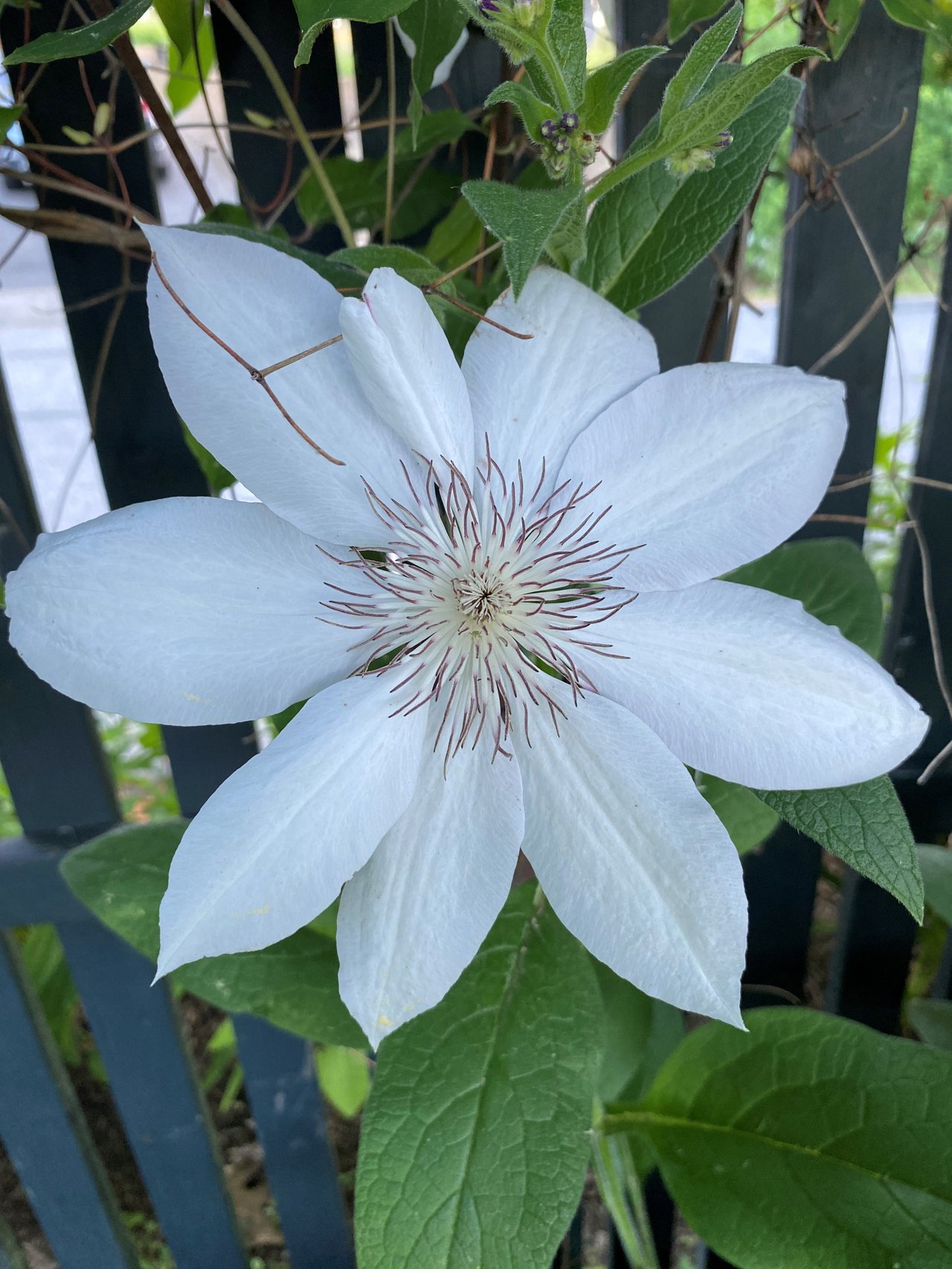
Love-blind, Virgin’s Bower, Traveler’s Joy. Clematis is known by many names. This queen of the climbing vines has a lovely tendency to gracefully entwine itself up and around other plants or objects until its face reaches the sunlight has enchanted mere mortals as far back as ancient Greece. Some think it was named for the Virgin Queen Elizabeth some believe the vine sheltered the Virgin Mary during her flight from Egypt with Joseph and Child, and others just find joy in its rambling ability to cling, grown and shine in almost any setting or place. The size and magnificence of some its flowers makes it difficult to believe they are easy to grow. They range in size and shape from one-inch bells up to eight-inch star-shaped dazzlers and range in colors from white, pinks, purples, reds, blues, and come in single and double blossoms! Some are striped; some are sky blue with lime green centers; some are so dark purple they look almost black. The varieties seem endless. How does one choose?! Quite frankly, it’s the most difficult thing about growing them! Clematis are typically grown for their vertical interest and can add whimsy and charm to any garden. They can brighten a dark pergola post or add a pop of color to a garden sculpture or delicate embellishment to a sturdy trellis. Plant them to run along the top of a fence, or to climb up a mailbox or lamp post, or to weave throughout a climbing rose. Wherever they are, they create a happy greeting for whoever encounters them.
Many nurseries and mail-order companies will have a good supply of varieties throughout the growing season. It is best to plant clematis in a place where they will get full sun to part shade. Moist, well drained soil is best, with a little bit of lime, and perhaps a piece of slate at its base to keep its “feet” cool. None of this is a requirement. They do however require a bit of patience once started. A saying associated with their growing is, “first year they sleep, second year they creep, third year they leap!” Once their root system is established, they can survive harsh northern winters surprisingly well and thrive for many years. Sometimes in spring they are late to emerge and even seem dead. If little to no life seems to be present, gently with fingers – not tools – dig around the base of the plant to investigate. If the roots radiate into the earth from the center to form a crown and are pliable and orange in color, the plant is fine. Just give it time. Occasionally, clematis get stubborn and decide not to bloom for a season or two. As long as the roots are fine, leave it alone, and one day out of the blue it will come back bigger and more magnificent than ever. Who doesn’t love a little mystery and surprise in the garden?
There is always the question of whether or not to prune clematis. Typically, if they bloom in May or early June, they can be left alone. However, their vines can get quite thick, and sometimes dead parts get tangled up with new growth, making the plant a bit unsightly (it will not affect the beauty of the flowers however). It is okay to prune out this winter kill and overgrowth to tidy up the plant. If the plant has died back completely, just water and fertilize in the spring and let nature do the rest. If the clematis bloom-time is in late June or later, it should be cut back to about six to twelve inches above the ground in late March or early April. Their stems are quite delicate and brittle at this point, and it is quick and easy to do. And, if there is no time for any of this – not to worry, clematis will manage just fine on its own. Just don’t let too many seasons of neglect go by.
Next step is to sit back and enjoy these beautiful flowers when in full bloom – and marvel at the wonders of nature, and perhaps think about all who have done the same for centuries!