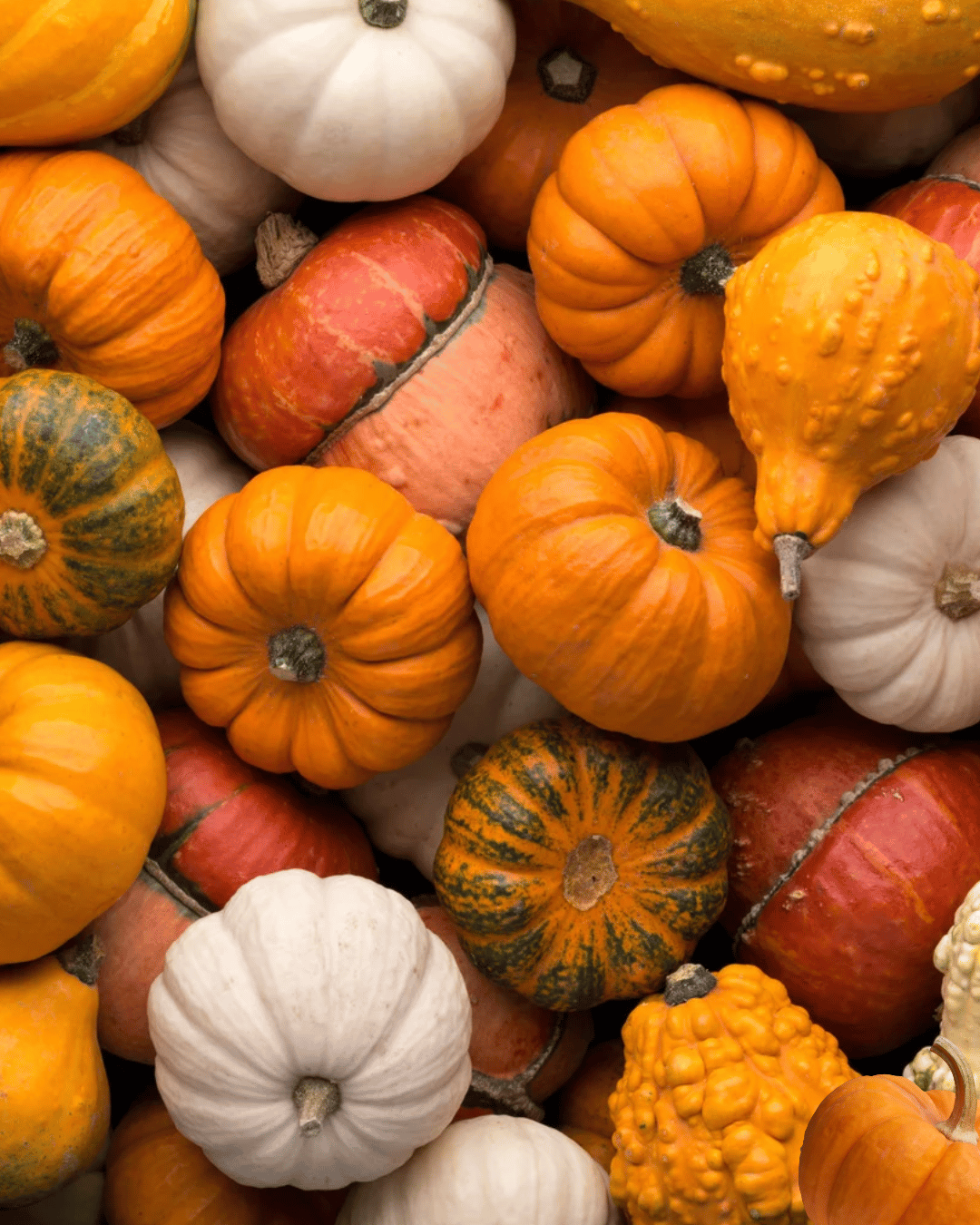
Crimson canopies of maple leaves set against bluebird skies. October’s low light and early setting sun leaving just enough nip in the air to warrant a hot cup of cider. Fields and porch steps dotted with orange, gold and green pumpkins, gourds, and squash. Oh my, how lucky we are to have this wonderful season! Now is the time to harvest or purchase these prized plants to enjoy either by consumption or decoration – or to save their seeds for next year’s crop.
Gourds are truly fascinating plants. They have been cultivated for thousands of years – not for food, but for everyday household uses. Their history stretches back as early as 2200 BC, when the Egyptians utilized them as water bottles, and Indigenous Peoples of North America made them into storage containers and utensils. Now gourds are prized mostly for their decorative qualities, adding unique shapes, colors and textures to seasonal displays. However, many varieties still have practical uses such as luffas, vases, bowls, birdhouses and even musical instruments.
Let’s face it – squash look weird but are delicious! Who doesn’t love a warm bowl of butternut squash soup with a dollop of fresh whipped cream sprinkled with its toasted seeds on top? Or an acorn squash stuffed with mushrooms, cranberries, walnuts and goat cheese? The recipes are as endless as the varieties one can grow. And the beauty of this yummy fall staple is they keep for long periods of time – hence the name Winter Squash! Squash was also grown in North America by Indigenous people long before European settlers arrived. In the northeast, the agricultural practice of growing corn, beans and squash together was common. This “Three Sisters,” system was utilized to enhance soil fertility and plant growth. The corn provided a trellis for the beans to climb, the beans put nitrogen into the soil for all three plants, and the squash's large leaves suppressed weeds, retained soil moisture, and deterred pests with their prickly vines. This is a fun method of gardening to enjoy with children – and when space is limited.
Of all these fall plants, what says autumn more than a cheerful pumpkin? The pumpkin is part of the squash family, and it too has been planted and utilized for its many culinary delights for centuries. Perhaps its most popular use today is for the traditional Halloween jack-o-lantern. This tradition is believed to have begun with the Irish folktale of Stingy Jack, a clever man who tricked the Devil but was denied entry into both heaven and hell after his death. The Devil gave Jack a single burning coal to light his way, which Jack placed inside a carved turnip, creating a lantern to light his way as he haunted the countryside. In the 19th century, Irish and Scottish people would carve scary faces into turnips, potatoes, and other vegetables to frighten away this "Jack of the Lantern" and other evil spirits on the night of Samhain, a Celtic festival that marked the beginning of winter. The shift from turnips to pumpkins happened when Irish immigrants arrived in America and discovered the larger, softer, and more readily available pumpkin – and hence our modern-day Halloween tradition was born!
It's fun to think about these plants and the role they have played in cultures and traditions including the first Thanksgiving here in North America. They are easy to grow. Be sure to wait until all threat of frost has passed and the ground temperature is about 60 degrees. Place seeds in an area with plenty of room to sprawl or climb with plenty of compost and at least half a day of sunshine. Or, start them indoors in April and start to acclimatize them to outside conditions two weeks before planting. Seeds can be saved from this year’s bounty or grab packets in local nurseries as they are available. Then start the cycle of pumpkin pie, squash bread, warm soups and cheerful decorations can all over again!