Let’s face it, Hosta is queen of the shade garden. It fills shady gaps with beautiful green foliage
ranging in color from teal blue, to lemon-lime, to stripy spring greens with white and varying sizes to
match. They add texture and sturdy elegance to the garden, whether planted as a focal point or in
masses. But, there are other plants with interesting textures, sizes and shapes that will also add a pop
of color for the darkest areas of the garden bed – and also get along just fine with hosta!
Brunnera macrophylla is a lovely plant with heart-shaped leaves and delicate forget-me-not-like blue
flowers that bloom throughout April and May. Two great varieties for the garden border are Jack
Frost and Sea Heart. Jack Frost has silvery leaves with green veins, hardy to Zone 4 and grows to be
about 12 inches tall and 18 inches or so wide. Sea Heart is similar, but has a more striking silver tone
to the leaves. Its leaves are a bit thicker, making them a good choice for a hot summer. Plant some
spring bulbs around them for some added excitement. Unlike Hosta, deer do not love them!
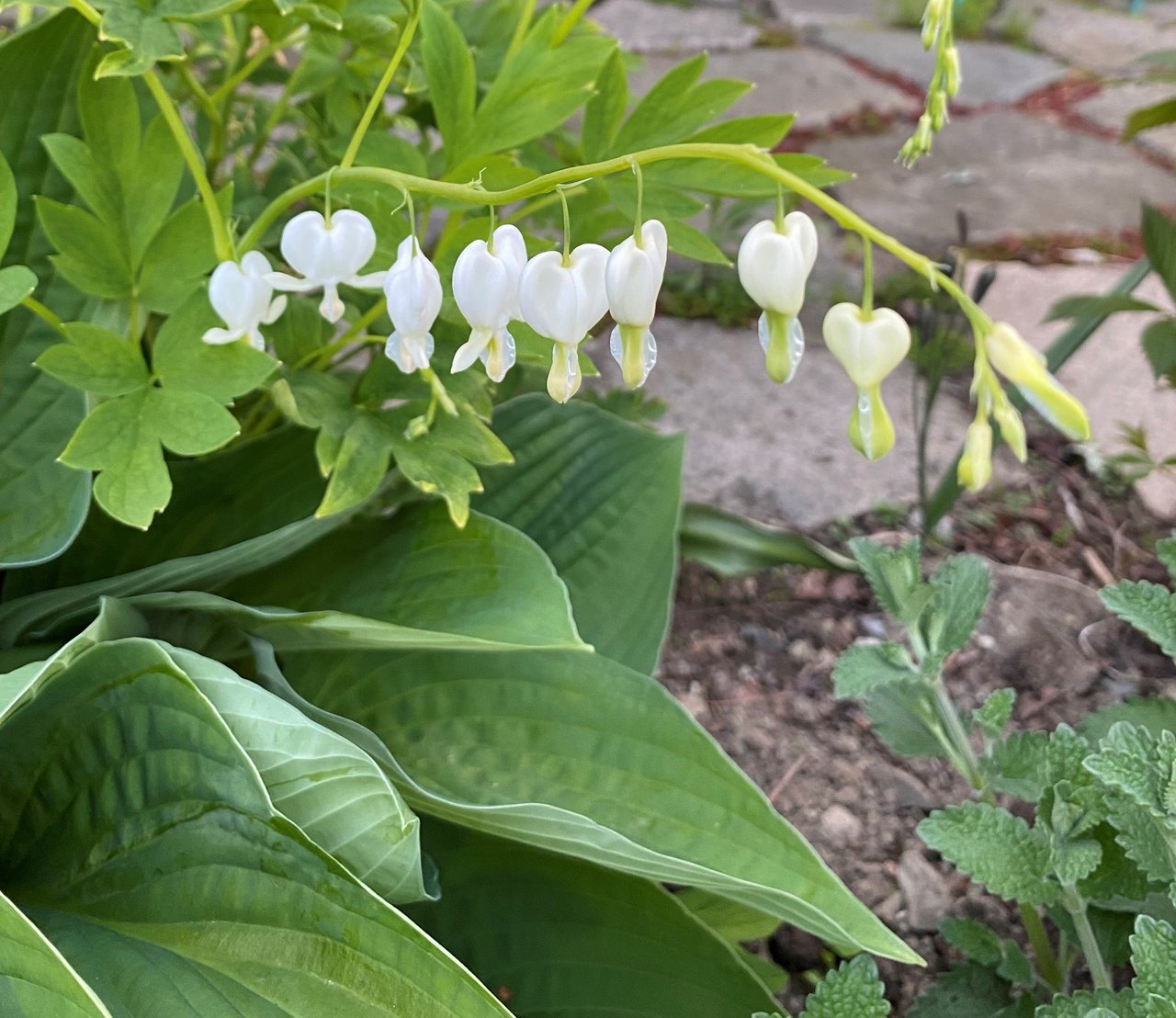
A classic garden perennial perfect for any shady corner is Dicentra spectabilis, commonly known as
old fashioned Bleeding Heart. These amazing plants bear arching stems lined with dangling pink
flowers shaped like little hearts with a drop of blood at the bottom (sounds yucky, but is really quite
gorgeous and amazing). The Alba variety is covered in pure white hearts and is sure to light up any
dark spot and one’s own heart! They are quite hardy, and bloom throughout May and June,
sometimes longer if the summer is cool and damp. If planted amongst Hosta and Brunnera, its
beautiful flowers will rise above the foliage and dance delightfully with every breeze. When its
foliage dies back in summer, the Hosta and Brunnera conceal their browning leaves and cover any
bare spot left behind by their dormancy.
There are dozens of varieties of Epimedium to choose from for the shade garden. They add a
delicate, almost whimsical air to the landscape and look especially lovely surrounding the trunk of a
spring-blooming tree. Their layered, graceful, heart-shaped leaves come in many different shades of
green with accents of pink, purple or red and their tiny Columbine-like flowers can be found in
many colors. The variety Thunderbolt has semi-evergreen foliage that turns purple-black with green
veins and bright yellow flowers. Ellen Wilmot is a lovely garden hybrid with fascinating flowers that
are deep rich orange-red, and Bandit is a tiny charming plant with purple-edged leaves and creamy
white blossoms. They bloom between April and June, and once the blossoms are past, the leaves
remain beautiful until frost.
Heuchera, commonly known as coral bells, are another exciting plant to add to the shade garden.
There are many varieties, but the most dramatic ones have foliage that range in shades of red to
almost black. Obsidian is a favorite, with its dark shiny foliage and tiny white bell-shaped flowers. It
blooms in June and July and looks fabulous planted with bright green or silver-leaved plants such as
Hosta or Brunnera.
Pulmonaria is perfect for the shade, and who wouldn’t want a plant named after the Trevi
Fountain?! Trevi has slender, bright silver spotted green leaves with compact short spikes of profuse
cobalt-blue flowers. It grows fast and looks fabulous with yellow Epimedium. Raspberry Splash is a
perennial favorite for its upright fuzzy foliage that is speckled with silver and purple flowers. Silver
Bouquet is another great one due its tolerance for hot humid summers and its large coral to pink
flowers that fade to warm violet. Its spectacular silver foliage really shines in the darkest corners of
the shade garden.
Pour a glass of lemonade, pull up chair, and enjoy the delights of the shade garden!